
House Concert Financial Guide
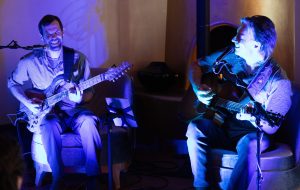 Thank you for your interest in hosting a house concert with Chris Chickering.
Hosting a house concert with Chris is a unique experience your guests will remember for years. Imagine your living room, backyard, or community space transformed into an intimate concert hall, where friends, family, and neighbors gather for an evening of live music, stories, and connection.
How does a house concert work financially?
There are a few simple ways to structure the financial side of a house concert:
• Host-funded event – you bring Chris in as a gift to your guests
• By-donation model – guests are invited to make a donation to support the music
• Hybrid – a combination of host contribution and guest donations
If you plan to simply hire Chris and pay a set fee for the performance, that is a straightforward conversation between you and Chris (or his management) about your event, location, and budget.
If you are interested in using the by-donation model, the rest of this page explains how that approach typically works and what has proven to be successful and comfortable for hosts and guests. Some of the details later on (such as seating, sound, and basic schedule) apply to any house concert, regardless of financial model.
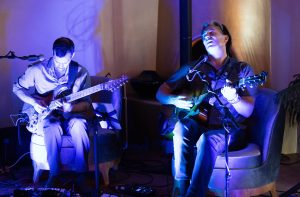 By-donation house concerts are:
• Invitation-only events held in someone’s home or place of business
• Presented by a host who does not profit from the event
• Paid for by guest donations to the artist
People typically host house concerts to create a special, memorable experience for their friends, neighbors, family, co-workers, or clients. Each house concert is a collaboration between the artist, the host, and the people you invite.
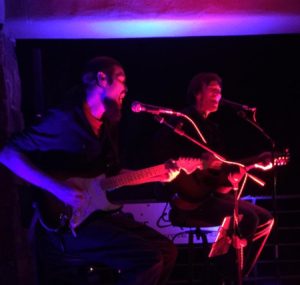
- Chris can play as a soloist, duet, trio, or with his full band, Chris Chickering and the Now.
Keys to by-donation success
For the by-donation model to be financially viable and comfortable for everyone, these guidelines have proven very effective.
Attendance and invitations
• Aim for a minimum of about 35 people in attendance
• To get around 35 people to show up, plan to invite at least 70 (roughly half will attend)
• House concerts are typically attended by the host’s friends, neighbors, family, and/or co-workers
 How to describe the event
• Call it a “house concert,” not a “house party”
• Make it clear in the invitation that this is a “by-donation-only” event
• Do not specify a dollar amount in the invitation
– Not suggesting a specific amount helps guests feel comfortable donating whatever they like
RSVPs and schedule in the invite
• Ask guests to RSVP, as seating will be limited
• Let people know the basic event schedule when you invite them
– This helps guests plan around childcare, dinner, and other commitments
If you decide to move forward with this model, Chris can provide suggested language for your invitations so it feels natural and easy to describe the event.
Typical house concert flow
This schedule has been used successfully many times. It blends time for socializing with a focused concert experience. Exact times can be adjusted, but the structure works very well.
Example evening schedule
• 6:00 pm – Musicians arrive
Chris and the musicians arrive about one hour before guests to set up the PA system and lighting and do a quick soundcheck.
• 7:00 pm – Guests arrive
Guests arrive to socialize, have drinks and snacks, and get comfortable.
• 7:55 pm – Five-minute warning
The host gives a five-minute notice that the concert is about to begin.
Guests are encouraged to use the bathroom and then find a seat in the concert area.
If you wish, guests can be given a simple handbill or program with musician bios and links.
• 8:00–9:00 pm – House concert
Room lights are dimmed except for the stage lighting.
Chris performs approximately one hour of music, with stories and connection.
• 9:00 pm – Donation moment and transition
The final song finishes, and the host joins Chris at the front.
The host briefly thanks everyone and explains the donation process.
Guests are invited to make a donation to show appreciation for the concert.
The musicians move to the CD/merch table to meet people and sign CDs.
After that, guests can stay and hang out as long as you like. The entire experience (social hour plus concert) can be as short as around two hours, depending on your preferences and how long guests linger.
 The donation moment
The donation moment is important to making the by-donation model sustainable and respectful for everyone. The goal is for it to feel simple, warm, and low-pressure.
• As the last note of the concert rings out, the host comes up to stand next to Chris
• The host reminds guests that this is a donation-based event and invites them to contribute
• There will be a clearly visible donation bucket on or near the stage
• Guests are encouraged to give whatever feels right to them
• No specific dollar amount is suggested
Chris can provide:
• A small card with suggested wording you can use for the donation announcement
• Coaching in advance so you feel at ease with this role
After the short message, the musicians walk off stage and go directly to the CD/merch table. This takes the pressure off anyone who needs a moment to decide what they would like to give.
Practical house concert details (for any model)
The following details help create a beautiful listening environment and an easy experience for you. They apply whether your event is host-funded, by-donation, or a hybrid.
Sound and lighting
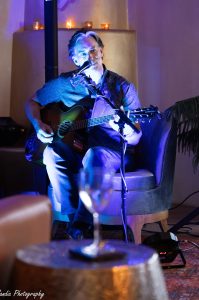
• Chris will bring a small-footprint PA system and lighting that will look and sound great in your space
• During the concert, room lights are typically dimmed, with the stage area lit
Concert area vs. social area
• Ideally, the concert area is separate from where people socialize before and/or after the concert
• If space is limited and both happen in the same room, Chris can help you think through the transition
Seating
• Every person watching the concert should have a seat (chair, cushion, bench, etc.)
• Arrange seats theater-style, close together, all facing the performance area
• Good options include foldout chairs, couches, benches, fabric-covered chairs, and pillows or blankets on the floor
• Avoid scattered table seating during the concert; the goal is a focused listening space
Timing and structure
• Musicians arrive about one hour before guests to set up
• Guests arrive about one hour before concert time to socialize
• There is always a five-minute warning before the concert starts
• The concert itself lasts about an hour
• Guests are welcome to stay afterward as long as you would like
Indoor vs. outdoor
• Successful house concerts can be held indoors or outdoors
• They can happen any time of day or night, weeknight or weekend
• Outdoor events work best with a simple backup plan for weather
 Artist configuration
• Chris can perform:
– Solo
– As a duet
– As a trio
– With a full band
If you prefer a host-funded event
If you prefer to pay directly for the performance instead of using the by-donation model, there is no need to follow the donation guidelines on this page. In that case, things stay simple: you and Chris agree on a fee and format that feel right for your event, and together you design an evening that fits your space and occasion.
Next steps
If this by-donation model sounds like it could work well for you, or if you would like to compare it with a host-funded option, the next step is to reach out so we can talk through details, answer questions, and explore dates.
Call 505-670-0712 or email Hello@ChrisChickering.com to discuss hosting options and find the approach that feels right for you and your guests.
